
Sprinkler Rough-In Installation
Rough-in is the hands-on part of the job — running CPVC pipe through the framing, positioning heads, and connecting the system to the water supply. It happens during the framing phase, before insulation and drywall go up.
Rain City Fire Protection coordinates directly with your builder to schedule rough-in around the other trades. For a typical single-family home, we’re in and out in 3 to 5 days. We leave the jobsite clean and ready for the next trade.
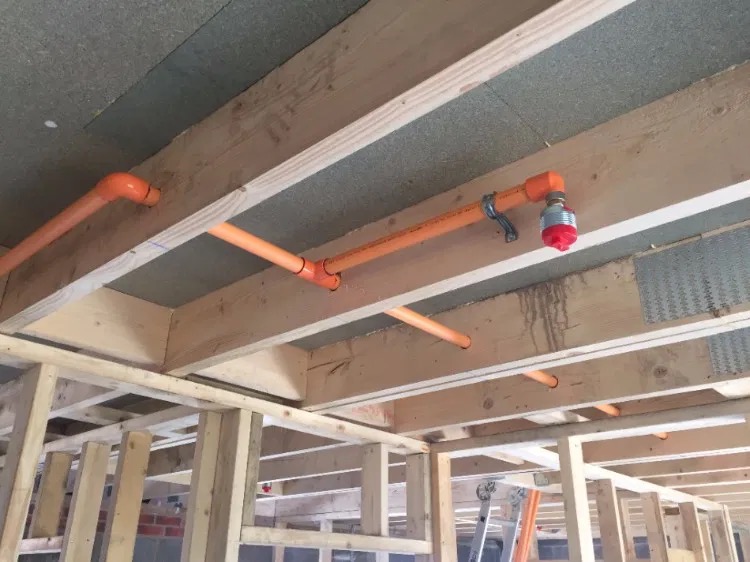
What Gets Installed
Everything that goes in during the framing phase — before drywall closes it up.
Builder Coordination
Scheduling
We work directly with your general contractor to find the right window in the build schedule. Sprinkler rough-in typically happens during or just after plumbing and electrical rough-in. We confirm the schedule a week in advance and show up when we say we will.
Trade Coordination
Fire sprinkler pipe shares space with plumbing, electrical, and HVAC in the walls and ceilings. We coordinate with the other trades to avoid conflicts and make sure everyone’s work fits. If something needs to move, we figure it out on site rather than leaving it for the next guy.
Clean Jobsite
We clean up after ourselves. Pipe scraps, packaging, and debris get removed at the end of each day. Your builder shouldn’t have to pick up after us, and they won’t.
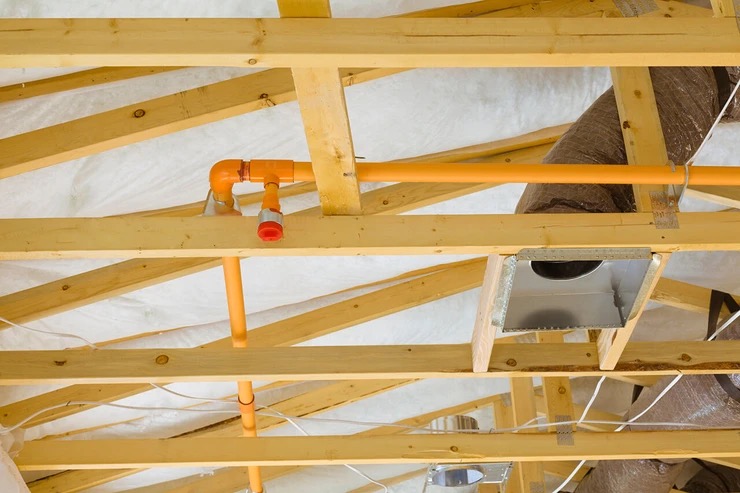
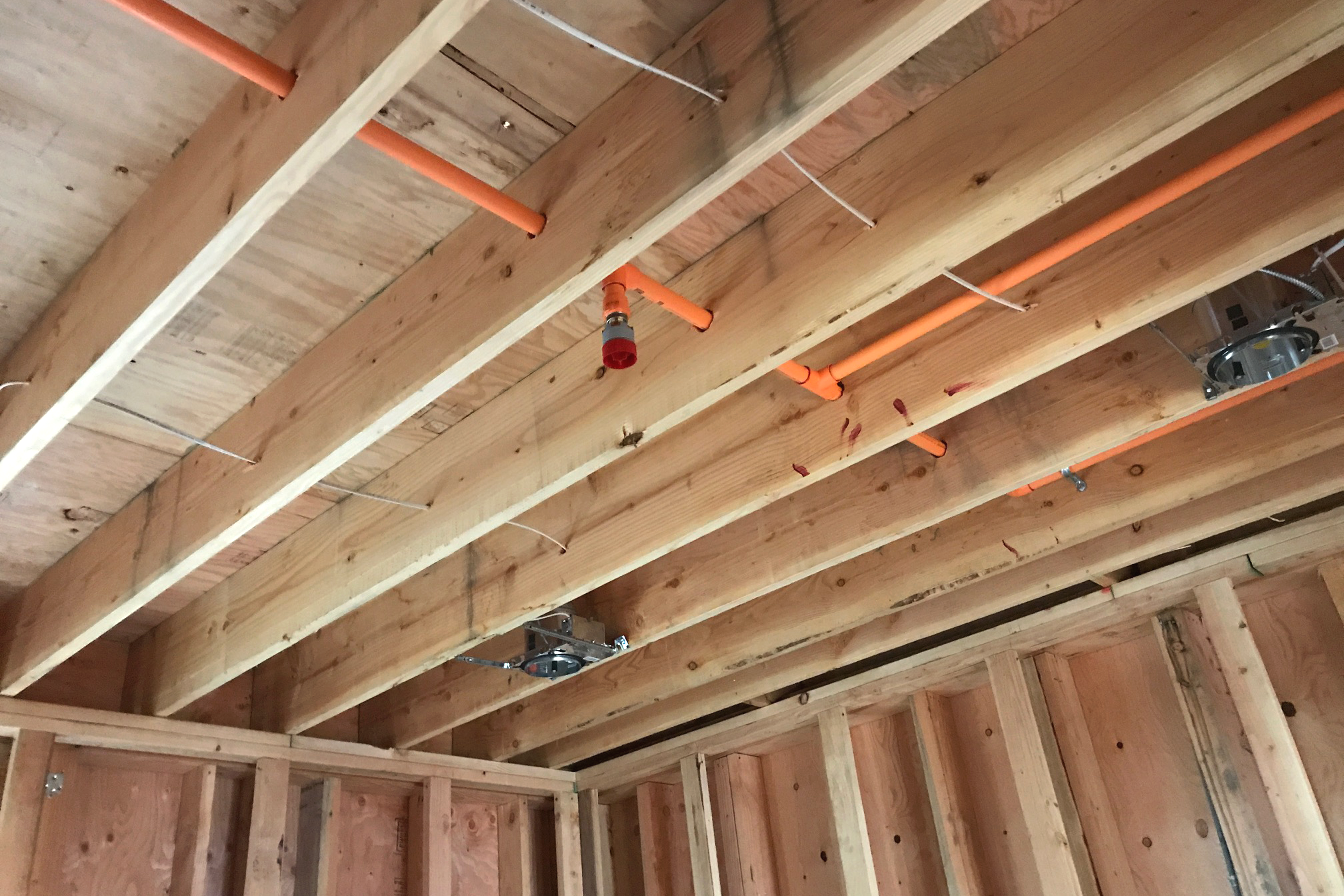
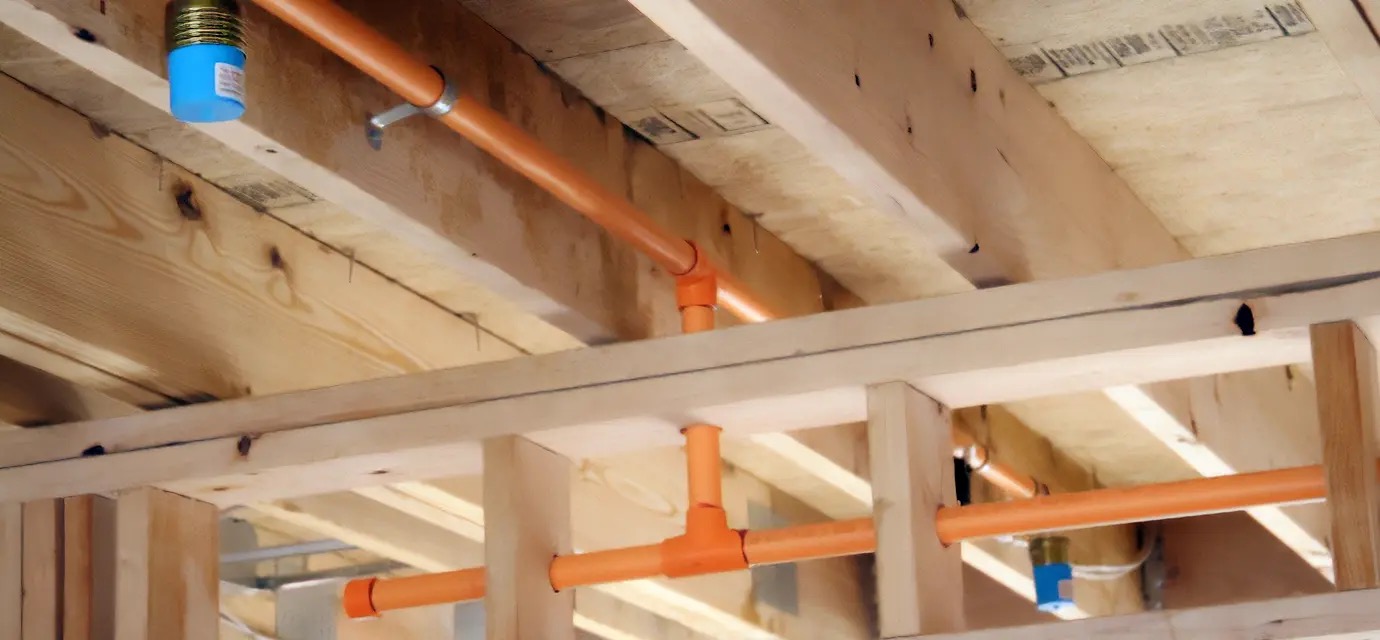
Rough-In Photos
CPVC pipe runs during the framing phase of recent residential projects.
Frequently Asked Questions
We use CPVC (chlorinated polyvinyl chloride) for residential fire sprinkler systems. CPVC is the industry standard for residential work — it's lightweight, corrosion-resistant, and approved under NFPA 13D. It's easier to work with than steel, which keeps installation time and cost down.
We coordinate directly with your builder and other trades — plumbers, electricians, HVAC — to avoid conflicts. Sprinkler rough-in typically happens during the framing phase, alongside or just after plumbing and electrical rough-in. Proper scheduling prevents delays for everyone.
A typical single-family home takes 3 to 5 days. Larger homes or multi-unit projects like townhomes may take longer. We'll give your builder a specific timeline during the coordination phase so they can plan around it.
No. We coordinate directly with your general contractor or builder. If you want to visit the site during rough-in, you're welcome to — but it's not necessary. We'll send photos of the completed rough-in for your records.
After rough-in, the system needs to pass a rough inspection before insulation and drywall go up. We schedule this inspection and walk it with the inspector. Once approved, the builder can proceed with insulation and drywall. Final trim and testing happen after the house is finished.
Related Services
Ready to schedule your sprinkler rough-in?
Send us your approved plans and your builder's schedule. We'll coordinate the rest.