
Concealed Sprinkler Heads
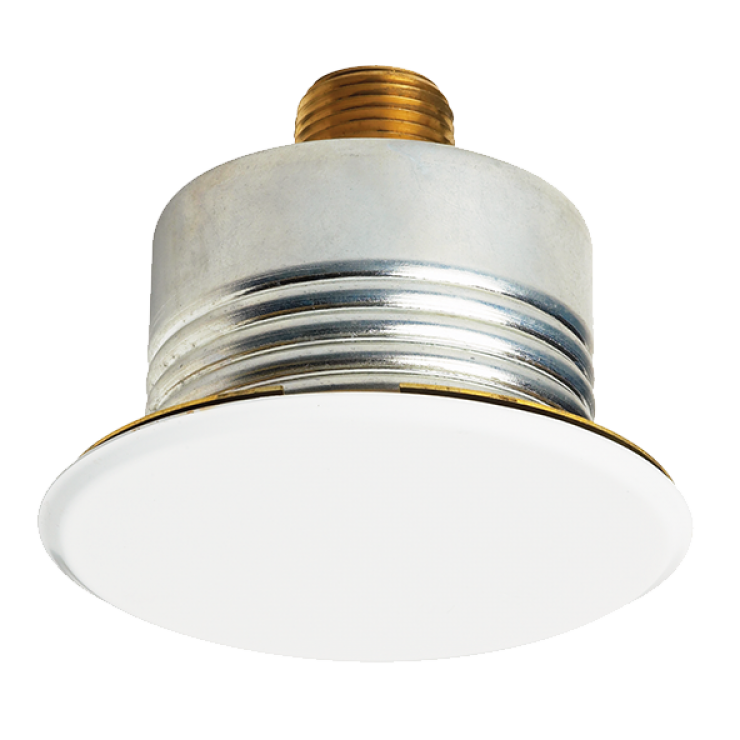
Nobody wants a fire sprinkler head sticking out of their living room ceiling. With concealed heads, you get full fire protection behind a flat, flush-mount cover plate that blends with your ceiling.
The cover plate sits flat against the finished ceiling — no visible pipes, no dangling hardware. If a fire starts, heat melts the solder holding the plate, it drops away, and the sprinkler activates. Clean design, full protection.
How Concealed Heads Work
A two-part assembly designed to disappear into your ceiling until it's needed.
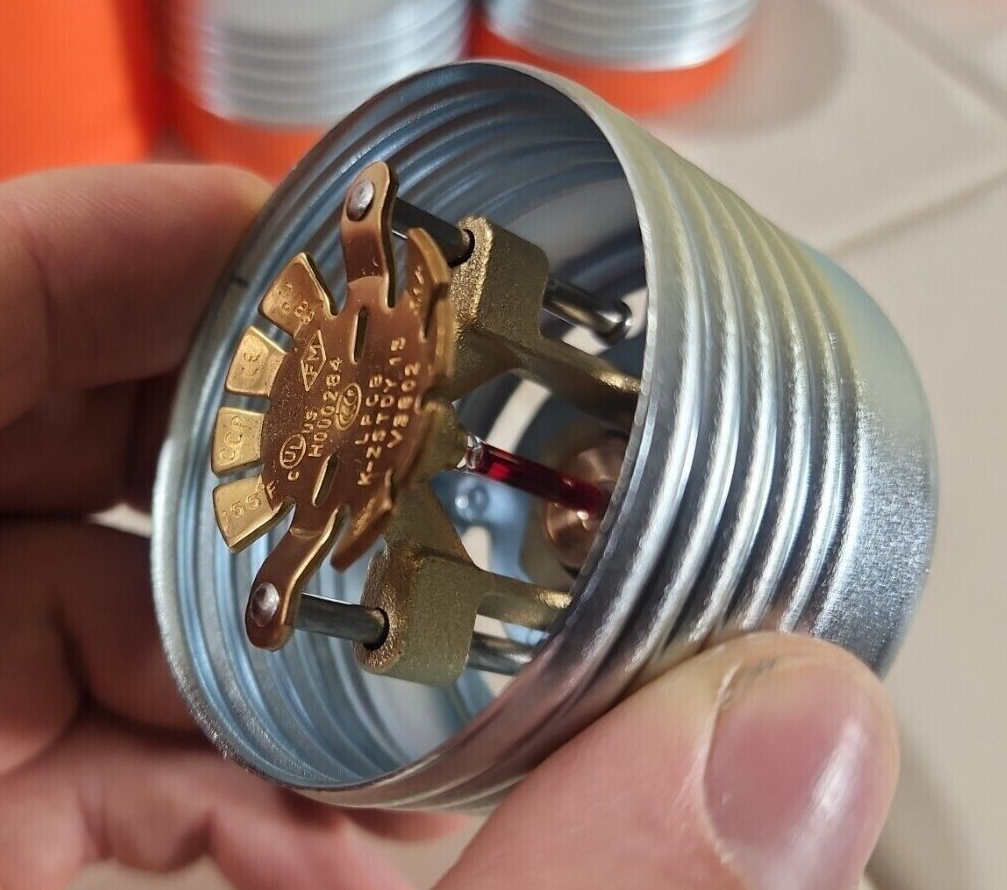
A concealed sprinkler head is a two-piece assembly. The sprinkler head itself sits above the ceiling line, hidden from view. A separate cover plate — held in place by heat-sensitive solder — sits flush with the finished ceiling.
Under normal conditions, all you see is the flat cover plate. It can be painted to match any ceiling color. In a fire, the rising air temperature melts the solder link (typically at 135-155°F), the cover plate drops away, and the sprinkler head descends and activates at its rated temperature (typically 155-165°F).
We use concealed pendant heads from trusted manufacturers like Viking and Tyco. These are UL-listed, NFPA 13D-approved heads designed specifically for residential applications.
Head Types Compared
Not every room needs a concealed head. Here's how the three main types compare.
Concealed Pendant
A flat cover plate sits flush with the ceiling. When heat activates the head, the solder holding the plate melts, the plate drops away, and the sprinkler deploys. This is what we install in most homes.
Best for: Living rooms, bedrooms, hallways, kitchens — anywhere aesthetics matter
Semi-Recessed
The head sits partially above the ceiling line with a small escutcheon ring visible. Less discreet than concealed, but sometimes required by code in certain ceiling configurations.
Best for: Rooms with limited above-ceiling clearance
Exposed Pendant
The full sprinkler head and deflector hang below the ceiling. Functional and code-compliant, but visible. Common in basements, garages, and utility rooms.
Best for: Garages, unfinished basements, mechanical rooms
Why Most Homeowners Choose Concealed
Washington state requires fire sprinklers in new residential construction. That means every room in your home will have at least one sprinkler head. Concealed heads keep those heads from dominating your ceiling the way exposed hardware would.
In finished living spaces — living rooms, bedrooms, kitchens, dining rooms — concealed heads are the standard choice. We typically use exposed pendants only in garages, unfinished basements, and utility areas where aesthetics aren’t a priority.
The upcharge for concealed heads over exposed is modest. For most single-family homes, switching to concealed throughout the living spaces adds a few hundred dollars to the total project cost.
Frequently Asked Questions
The cover plates come in white and are paintable. They can be painted to match your ceiling color. Do not paint the sprinkler head itself — only the cover plate. We recommend using a thin coat of latex paint so the solder joint that holds the plate in place isn't compromised.
Yes. Concealed heads have the same flow rate and coverage as exposed heads. The only difference is appearance. When the cover plate drops away, the head activates just like any other residential sprinkler. Performance is identical.
A heat-sensitive solder link holds the cover plate in place. When the air temperature at the ceiling reaches the activation point (typically 155-165 degrees F), the solder melts, the plate falls away, and the sprinkler head deploys and begins flowing water. The entire activation takes seconds.
Concealed heads cost a bit more per head than exposed pendants. For a typical home, the price difference for the whole system is modest — usually a few hundred dollars total. Most homeowners find it well worth it for the cleaner look.
Related Services
Want a cleaner look for your sprinkler system?
We'll spec concealed heads for your home. Send us your plans to get started.